

PROCOMÚN
Mostrando resultados 301 a 320 de un total de 840
-
Química Comestible Proyecto Profundiza
 Blog creado durante el desarrollo de un proyecto Profundiza relacionado con la Química y alimentos así como el proyecto desarrollado. https://quimicacomestibleproyectoprofundiza.blogspot.com/Área de conocimientoContexto educativoTipo de recurso
 -
El modelo atómico
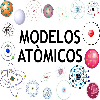 Vamos a estudiar el átomo, pero cuando buscamos información sobre él, vemos que hay muchos dibujos distintos y distintas teorías. ¿Cuál es la verdadera? ¿De donde han salido tantas teorías distintas? ¡Vamos a descubrirlo en esta apasionante WebQuest!Área de conocimientoContexto educativoTipo de recurso
 -
disoluciones
 Generalidades sobre disoluciones quimicas.Área de conocimientoContexto educativoTipo de recurso
 -
LA MATERIA Y ENLACE QUÍMICO
 En el universo existe una serie de características que permiten identificar una sustancia y distinguirla de las demás; al conjunto de ellas se les llama propiedades de la sustancia las cuales suelen ser físicas o químicas, esto es de gran interés en el cotidiano, porque así podemos identificar cuando se presenta un cambio reversible (no se altera la materia), irreversible (transformación de la materia en una nueva sustancia), lo cual nos lleva a entender la realidad circundante.Área de conocimientoContexto educativoTipo de recurso
 -
Principio de Huygens
 Método de análisis aplicado a los problemas de propagación de ondas. Se llama así en honor a los físicos Christiaan Huygens y Augustin-Jean FresnelContexto educativoTipo de recursoColecciones
 -
Tipos de lentes (flash)
 En el visual se ve cómo se comporta la luz cuando atraviesa una lente bicóncava y una biconvexa.Contexto educativoTipo de recursoColecciones
 -
Viajes interesterales
 Concepto de viajes interestelaresContexto educativoTipo de recursoColecciones
 -
Work of friction
 The forces of friction, which oppose displacement, also carry out work when a body is moving. The work of friction is converted into heat. The greater the force of friction, the more force must be exerted to move the body. Verify how friction affects the displacement of some blocks.Contexto educativoTipo de recursoColecciones
 -
Which moves faster? (II)
 Which UAM moves at a greater speed?Contexto educativoTipo de recursoColecciones
 -
What is work? (II)
 Work is one of the ways of transmitting energy between bodies. The following visual will help you understand the concept of work by modifying the force and the angle which it forms with the horizontal. Click on help to see the possibilities it offers.Contexto educativoTipo de recursoColecciones
 -
What is work? (I)
 The educational resource shows a visual about the work: in Physics, for there to be work there must be a force acting on an object and displacement of the object.Contexto educativoTipo de recursoColecciones
 -
What is the newton?
 Concept of Newton. The newton is the unit of force in the International System of Units.Contexto educativoTipo de recursoColecciones
 -
What is radioactivity?
 Concept of radioactivity. Radioactivity is the property which certain substances have for emitting radiation.Contexto educativoTipo de recursoColecciones
 -
What is energy?
 A picture shows some transformations of energy. The energy from the sun passes to plants, to oil, to coal, to animals and to human beings; they take advantage of it by using the energy from oil, animals, coal, etc.Área de conocimientoContexto educativoTipo de recursoColecciones
 -
Waves in the sea
 Concept of Waves in the sea. The waves on the sea or those which form on any surface of water, are a special instance of undulatory movement.Contexto educativoTipo de recursoColecciones
 -
Wavefront
 Concept of wavefront: wavefront is the locus of points characterized by propagation of positions of identical phase.Contexto educativoTipo de recursoColecciones
 -
Wave function
 Concept of wave function: there is a mathematical function associated with every particle which behaves like the functions of other undulatory phenomena.Contexto educativoTipo de recursoColecciones