


RECURSOS D'APRENENTATGE
-
SOLVING EQUATIONS AND PROBLEMS WITH EQUATIONS
Continuar enseñando al alumno Algebra con las ecuaciones de 2ºgrado y la resolución de problemas.
Àrea de coneixementContext educatiuTipus de recurs -
Trigonometry
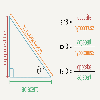
Con este recurso se pretende introducir la Trigonometría por medio de una actividad en el exterior. La idea original está tomada de una actividad colgada en TES Education.
Àrea de coneixementContext educatiuTipus de recurs -
3d-shapes. CLIL MATH LESSON
Unidad didáctica CLIL de geometría
Àrea de coneixementContext educatiuTipus de recurs -
Radians per second
¿A cuántos radianes por segundo va la bola azul?
Àrea de coneixementContext educatiuTipus de recursColecciones -
Math´s Gymkhana at "Parque de María Luisa" Sevilla
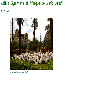
Unidad didáctica interdisciplinar mediante metodología AICLE para 3º ESO Matemáticas aplicadas bilingüe
Àrea de coneixementContext educatiuTipus de recurs -
Pythagoras' Theorem
This unit focuses on Pythagoras' theorem and how to prove it is true.
Àrea de coneixementContext educatiuTipus de recursColecciones -
Operations with integers - II
In this unit, we revise the basic ideas of integers and we use them to practise the following operations: sum, multiplication, division and powers. Before starting this unit, students should have studied integers in class in the traditional way. These activities are suitable as a complement to get a better understanding of the concepts and the operations. The numbers that appear in each window are generated at random. This allows you to use the window indefinitely and practise a lot of differ...
Àrea de coneixementContext educatiuTipus de recursColecciones -
Chance and probability
This unit introduces the concepts of probability and chance. The basic concept of theoretical probability is also introduced (events, frequency etc.). Practical examples are used to illustrate different concepts and the basic laws and rules governing probability are outlined (e.g. Laplace's rule and the law of large numbers). The unit ends with an introduction to the probability of compound events and focuses on examples of the union and intersection of events.
Àrea de coneixementContext educatiuTipus de recursColecciones -
Escher's_tessellations
The Dutch artist Mauritis Cornelis Escher (1898-1972) is, perhaps, one of the most highly respected artists in the world of mathematics. He is, without a doubt, one of the most successful contemporary "mathematical artists". His work reflects a deep understanding of geometry. However, the mathematical content of his work is much closer to you than you think. Just look around you, perhaps with a slightly different perspective to normal, and you will start to recognise different areas of maths ...
Àrea de coneixementContext educatiuTipus de recursColecciones -
A history of Mathematics
These pages aim to present some of the most important mathematical problems in chronological order. It is not intended to be an exhaustive explanation of each problem but to simply show the evolution of mathematical thought throughout history. In each section there is an outline of the most relevant historical events of the era and the maps indicate the area of interest, both from a mathematical point of view.
Àrea de coneixementContext educatiuTipus de recursColecciones -
Measuring angles
This unit focuses on how to measure angles as well as carrying out operations with these angles. It also looks at how these special pairs of angles relate to each other: complementary and supplementary.
Àrea de coneixementContext educatiuTipus de recursColecciones -
Math in an envelope
An envelope is an object which is used a lot in everyday life. We have all used envelopes to put letters or important documents into and as students we have often had to use them. However, as well as being very useful objects, envelopes are also interesting to analyse from a mathematical point of view. Their geometrical shape is of interest firstly to people who have to make them and secondly to maths students who can use them to review a few interesting concepts such as line symmetry and sim...
Àrea de coneixementContext educatiuTipus de recursColecciones -
Square root
After the four basic operations (addition, subtraction, multiplication and division) the square root is another mathematical operation which is traditionally studied at primary and secondary schools, because it is necessary to solve problems using the Pythagoras theorem, proportions and second grade equations. Nowadays, the calculation ease supplied by calculators and computers may lead us to think that learning mental calculation is no longer necessary. However, we also have technical means ...
Àrea de coneixementContext educatiuTipus de recursColecciones -
The game of life
This unit focuses specifically on "Simulation as a formal model". Most of the ideas and content of this unit have been taken from the last three units of Martin Gardner's book "Wheels. Life and other Mathematical Amusements".(W.H. Freeman and Company 1983), which specifically focus on the Game of Life. It uses a simple game to simulate social or biological behaviour based on a simple mathematical model Despite its simplicity, we shall look in more detail at its far reaching implications.
Àrea de coneixementContext educatiuTipus de recursColecciones -
Powers
The main principles and properties of powers are revised in the first pages to let students discover them intuitively when using the windows. Then students can check their knowledge of these principles through simple excercises. In the pages with calculation games students can practice mental calculation of multiplications and divisions and apply the index laws. Finally it revises one of the applications of powers, how it is the factor decomposition of a number.
Àrea de coneixementContext educatiuTipus de recursColecciones -
Representing numbers on a straight line
This short unit shows how whole numbers and decimals can be represented on a straight line. The concept of ordering numbers graphically is also introduced.
Àrea de coneixementContext educatiuTipus de recursColecciones -
Operations with natural numbers - II
In this unit, we revise the basic ideas of natural numbers and we use them to practise the following operations: addition, multiplication, division and powers. The numbers that appear in each window are generated at random. This allows you to use the window indefinitely and practise a lot of different exercises. Numbers consist of only one or two figures so the calculations can easily be done mentally. Magic squares with sums and multiplications are used in the exercises, however the main obj...
Àrea de coneixementContext educatiuTipus de recursColecciones -
Operations with natural numbers - I
In this unit, basic concepts of natural numbers are revised and the operations of addition and subtraction are practised. Numbers that appear in each window are generated at random. This allows you to use the window indefinitely and practise a lot of different exercises. Numbers consist of only one or two figures so the calculations can easily be done mentally. Magic squares are used in the exercises, however the main objective of this unit is to learn things about natural numbers.
Àrea de coneixementContext educatiuTipus de recursColecciones -
Square metres, cubic metres
These activities are designed to be viewed on a 17-inch screen and with a resolution of 1024 x 768 pixels because some windows show measurements in centimetres and millimetres that, when viewed with another configuration, won't correspond with reality; and the size of some windows can even be too big. This unit only deals with a basic knowledge on length, volume and weight units, as studied in primary school. It does not deal with the other units of the International System. Moreover, the stu...
Àrea de coneixementContext educatiuTipus de recursColecciones -
Regular polygons and circles
This unit is based on the study of the properties of regular polygons, their basic characteristics and the concept of the circle as a regular polygon with an infinite number of sides. As this unit is aimed at students in their first and second years of secondary education the content is at a very basic, purely constructive level.
Àrea de coneixementContext educatiuTipus de recursColecciones